
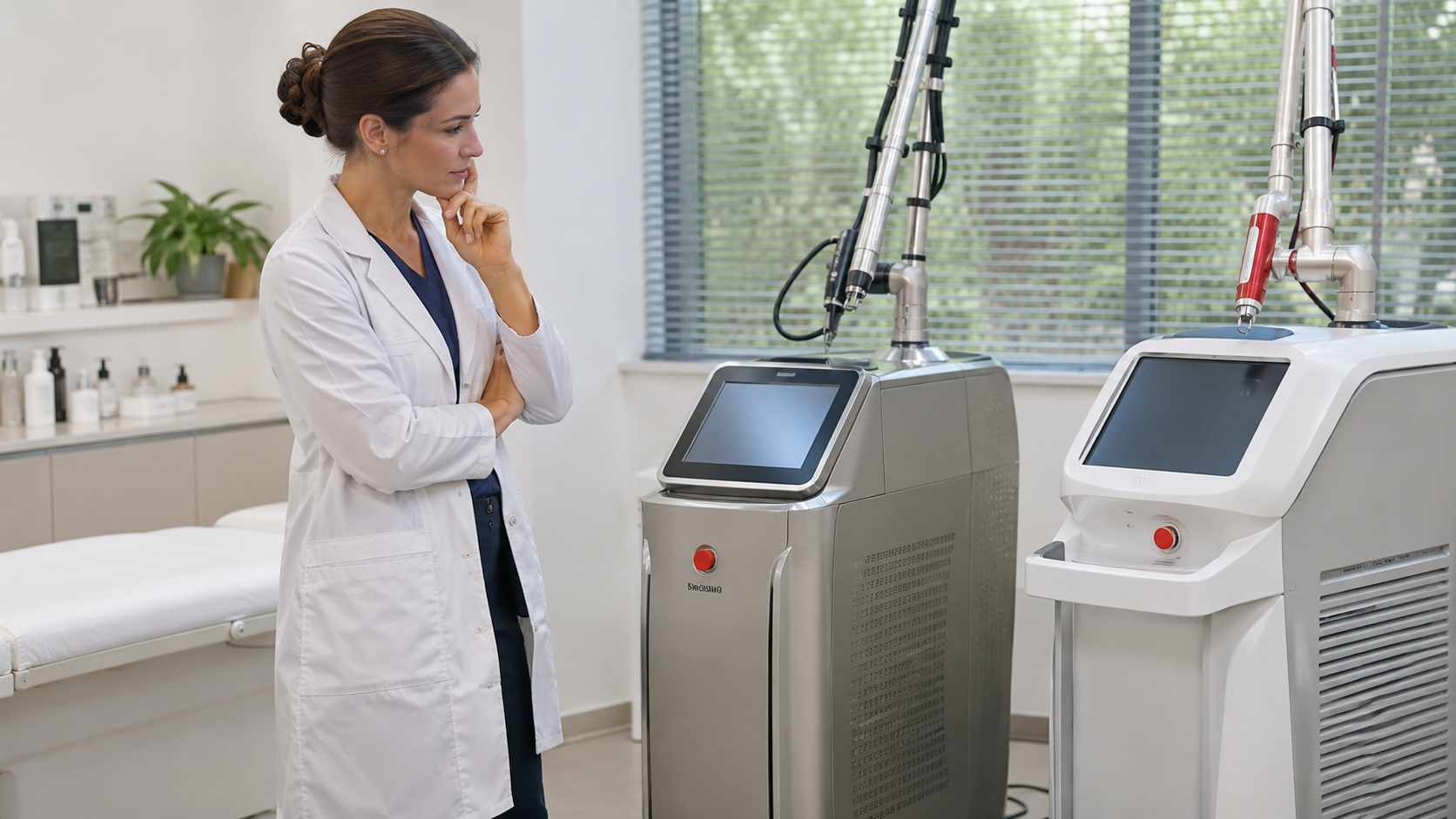
Laser technology has changed how cosmetic clinics approach tattoo removal and skin pigmentation treatments. Earlier methods often caused considerable damage to surrounding tissue. Modern laser systems use controlled pulses of light to target pigment more precisely. Among these developments, nanosecond and picosecond lasers have become important tools for removing unwanted tattoos.
The difference between these systems involves more than their age. Their pulse durations influence how energy interacts with tattoo ink and surrounding skin. Clinics such as Think Again Laser Clinic Brisbane use picosecond technology, reflecting its growing role in cosmetic treatments. However, understanding whether this approach offers meaningful advantages requires examining the clinical evidence alongside traditional methods.
Understanding Traditional Nanosecond Laser Technology
Q-switched nanosecond lasers have been used for tattoo removal for decades. They deliver concentrated bursts of light lasting billionths of a second. Tattoo pigments absorb this energy, creating rapid changes that help break larger ink particles into smaller fragments.
The body’s immune system gradually processes some of these fragments, allowing tattoos to fade over successive treatments.
The American Academy of Dermatology identifies laser treatment as a leading approach to tattoo removal. Traditional Q-switched systems have established clinical applications because they can target different pigments when appropriate wavelengths are selected.
Common systems include Nd:YAG, ruby, and alexandrite lasers. Each operates at wavelengths suited to particular pigment characteristics. However, achieving substantial clearance usually requires multiple sessions, and some colors remain difficult to treat.
What Is Picosecond Laser Technology?
Picosecond lasers operate with pulses measured in trillionths of a second. Their extremely short energy delivery creates strong mechanical effects that can fragment tattoo pigments while limiting the duration of heat exposure.
Research published in the Journal of the American Academy of Dermatology has examined whether these shorter pulses improve tattoo clearance. Some comparative studies have reported advantages over nanosecond systems, although results vary across tattoo colors and treatment settings.
The underlying principle is similar for both technologies. Laser energy targets ink particles, which are progressively broken down and processed by the body. Picosecond systems change the speed and intensity of energy delivery rather than introducing an entirely different removal process.
Comparing Picosecond and Nanosecond Laser Systems
Pulse Duration and Energy Delivery
The clearest distinction is pulse duration. Nanosecond systems release energy over billionths of a second, while picosecond systems operate approximately a thousand times faster when comparing equivalent numerical durations.
Shorter pulses can produce stronger photoacoustic effects, creating pressure waves that disrupt pigment particles. However, pulse duration alone does not determine treatment effectiveness. Wavelength, energy density, spot size, and pigment absorption also influence results.
Effectiveness Across Different Tattoo Pigments
Black tattoo ink generally responds well to several laser wavelengths because it absorbs light broadly. Colored pigments present greater challenges. Green, blue, red, and yellow inks may require different wavelengths for effective treatment.
A randomized study involving 49 patients, published in Lasers in Surgery and Medicine, found better overall clearance with the picosecond systems examined. However, researchers did not establish superior results for multicolored tattoos.
These findings suggest that picosecond technology can offer advantages under certain conditions. They do not establish that every pigment responds better to shorter pulses.
Skin Sensitivity and Potential Side Effects
Both laser technologies can cause temporary redness, swelling, tenderness, and blistering. Less common complications include scarring and changes in skin pigmentation.
The European Academy of Dermatology and Venereology recognizes both nanosecond and picosecond systems as appropriate technologies for laser-assisted tattoo removal.
Although shorter pulses may reduce some unwanted thermal effects, they do not eliminate treatment risks. Darker skin tones require particular care because natural skin pigment can also absorb laser energy.
Proper wavelength selection and conservative treatment settings remain essential for minimizing complications.
Treatment Sessions and Recovery Considerations
Picosecond lasers may achieve faster clearance in certain cases, potentially reducing the number of treatments needed. However, complete removal cannot be guaranteed with either technology.
The American Osteopathic College of Dermatology explains that tattoo removal generally involves multiple appointments spaced several weeks apart. These intervals allow the skin to recover and the body to process fragmented pigment.
Recovery also depends on tattoo size, ink density, treatment intensity, and individual skin response. Shorter laser pulses do not automatically mean shorter healing periods.
Equipment and Practitioner Expertise
Laser systems vary considerably in their technical capabilities. Some provide multiple wavelengths, adjustable pulse settings, and different treatment modes.
Yet sophisticated equipment cannot replace clinical judgment. Practitioners must evaluate skin type, tattoo depth, pigment composition, previous treatments, and potential complications.
Research published in StatPearls emphasizes that choosing suitable wavelengths and controlling energy delivery are central to effective tattoo removal.
A well-managed nanosecond treatment may therefore be more appropriate than a poorly selected picosecond procedure.
Are Newer Laser Systems Always Better?
Technological progress often creates expectations of consistently better outcomes. Picosecond systems offer measurable physical differences and promising clinical results. However, their advantages should be interpreted within the limitations of available research.
A systematic review published in the Journal of Cosmetic Dermatology found that picosecond Nd:YAG systems may reduce treatment burden in some circumstances. Nevertheless, researchers highlighted the need for stronger comparative studies before establishing consistent clinical superiority.
Traditional nanosecond lasers remain relevant because they have extensive clinical histories and can effectively treat many tattoo pigments.
The more useful question is whether a particular system matches the patient’s treatment requirements. A newer device may provide additional options without necessarily delivering better results for every person.
Understanding Laser Technology in Modern Cosmetic Clinics
Modern cosmetic clinics typically select laser equipment based on treatment applications, wavelength availability, clinical evidence, and patient safety requirements. These decisions reflect broader advances in aesthetic treatments, where new technologies continue to expand the options available for addressing skin concerns. However, choosing suitable equipment still requires careful consideration of each patient’s needs and the clinical evidence supporting different procedures.
For example, the Brisbane clinic referenced earlier reports using the Quanta Discovery Pico Plus platform for tattoo removal. Its stated capabilities illustrate how multiple wavelengths can be incorporated into picosecond equipment.
However, equipment specifications should be considered separately from independently verified treatment outcomes. Clinics must still assess individual tattoos and determine whether their available technology is suitable.
Patients can support informed decisions by asking about practitioner qualifications, expected sessions, possible complications, treatment alternatives, and realistic clearance expectations.
Conclusion
Picosecond and nanosecond lasers represent two established approaches to targeted pigment removal. Shorter pulses may improve results in certain circumstances, while traditional systems continue to provide effective treatment options.
Neither technology guarantees complete tattoo removal or complication-free recovery. Skin characteristics, pigment composition, wavelength selection, and practitioner expertise remain decisive factors.
As laser research advances, more comparative evidence should help clarify which systems perform best for specific treatments. For now, individualized clinical assessment offers a more reliable foundation for treatment decisions than technology claims alone.